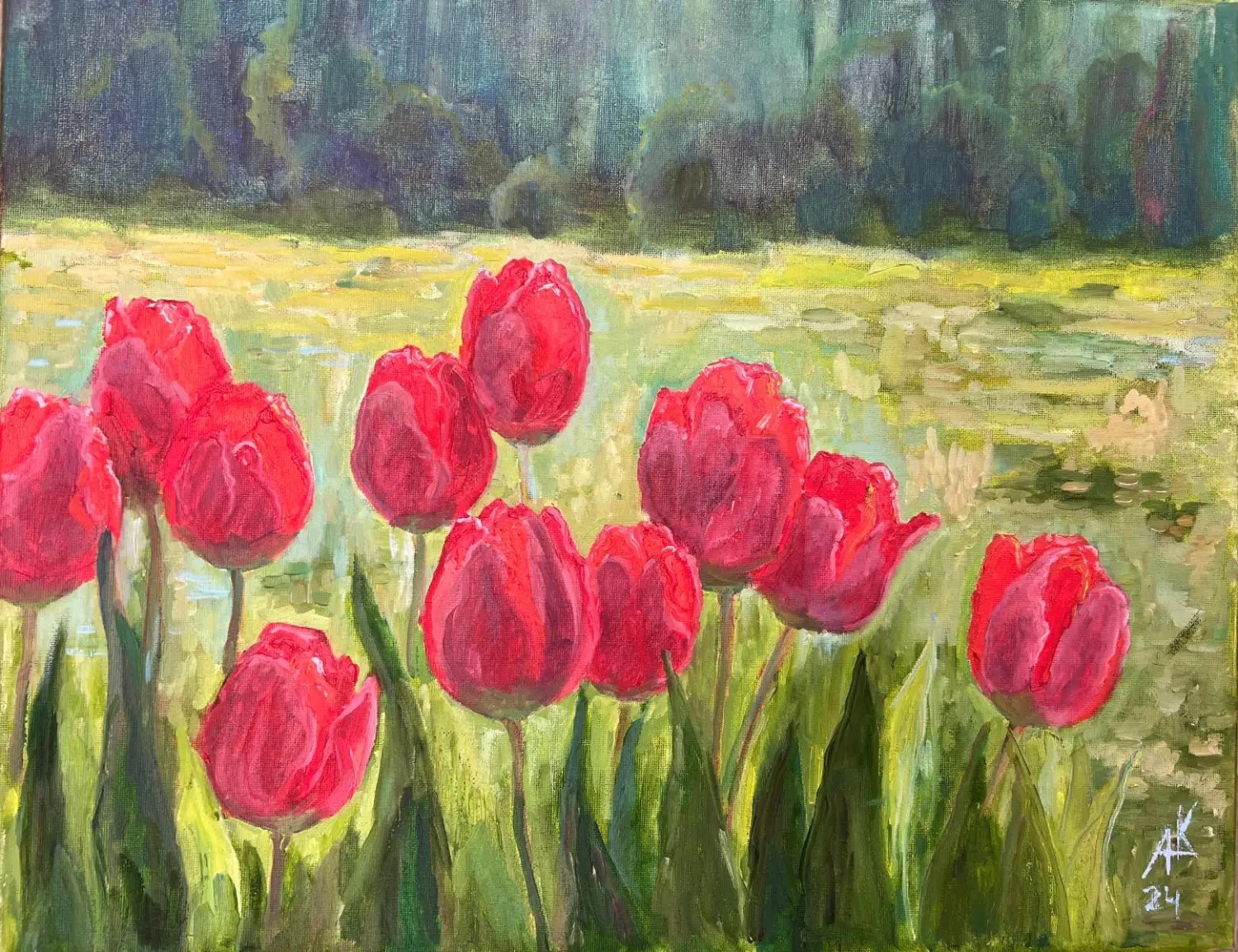
The word "curated" tends to conjure up someone in non-prescription glasses, poised to explain why you've missed the point entirely. The reality is far more interesting: the job is to find, among a great many works, the ones worth your attention — and to say why.
The practice has a long history. In nineteenth-century France, the Paris Salon was selected by a jury that decided which works would hang in the country's most important art exhibition. In 1863, by order of Napoleon III, a separate "Salon des Refusés" was mounted for works the official jury had turned away. Among them was Édouard Manet's Le Déjeuner sur l'herbe, which caused an outright scandal. Today that painting is considered one of the defining works of the nineteenth century. The episode is a useful reminder: even professional selection is fallible. Which is why a curator today looks not for obedience to academic convention, but for quality of execution and an independent artistic voice.
So what exactly does a curator look at when choosing contemporary painting?
The architecture of the picture. Do the colours work together, or do they fight? Does the composition hold its balance? Sometimes a technically tidy piece never becomes more than a collection of attractive details in search of a whole.
What sets the work apart from hundreds of others. An artist may draw on the great masters, but the question is whether the painting arrives at something of its own — in colour, in composition, in subject, in the character of the brushstroke.
Technique and materials. The point is whether the execution serves the idea, and whether the work will still look the way it should years from now, rather than deteriorating because sound practice and materials were disregarded along the way.
Finally, a curator never considers a painting in isolation, but within the context of the whole selection. Do the works sit together meaningfully? Or do they merely repeat one another? Is there a conversation between them, even if the artists have never met? A good collection need not be unified by a single theme or style. It can be varied — but it should never feel like a random assortment.
And what does any of this do for a buyer? It isn't about handing your taste over to someone else. A curator doesn't decide what you find beautiful. The job is to widen the field of choice, to point out work you might otherwise have walked past, and to filter out what doesn't meet the gallery's standards.
A curator can assess the quality of a painting. Only you can decide whether you want to see it on your wall every morning.