HELEA.
Curator

About the Curator and Philosophy

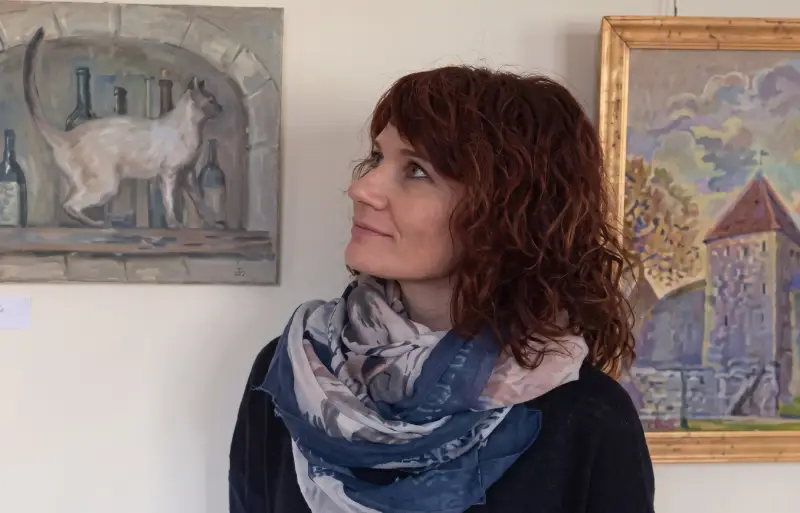
My name is Vlada Zharkova-Sviridova. My path in art began with classical training in miniature painting, which gave me a special, delicate sense of detail. Later this practical experience grew into a academic interest: I studied restoration at the Estonian Academy of Arts (EKA) and then received an art-historical education at the St. Petersburg Academy of Arts.

For me, learning is a lifelong journey. I am constantly exploring new painting techniques, regularly participating in international plein air workshops, and finding inspiration at the intersection of different disciplines—from psychology to dance. This diverse experience, combining the perspectives of a practicing artist, a conservator-restorer, and an art historian, enables me to see beyond the visual beauty of a work of art and appreciate its story, character, and the craftsmanship behind its creation.

My main rule is simple: I will never offer you anything I would not choose for my own home. I sincerely love every work presented in the gallery.

My task as a curator is not just to assemble a collection of current art and decor, but to find those living works that will resonate in the heart and over time become part of a family story.

An original work makes an interior truly unique, filling it with emotion, depth, and character. By acquiring an authentic piece you not only invest in art but also directly support independent authors, helping them continue to create new work.

Slow Art

We believe the home is an extension of our soul, our personal territory of silence. In a world overflowing with bustle, digital noise, and instant content, we need living anchors more than ever. We need objects that retain the warmth of human hands — pieces that ground us, bring calm, and return us to ourselves.

There are no random pieces in the HELEA gallery. Every painting is a deliberate manifesto of the Slow Art philosophy, behind which lie weeks of meticulous handwork, physical interaction with canvas and paint, creative searching, and sincere emotion. Slow art does not chase assembly-line efficiency: its value lies in unique texture, the honesty of a living brushstroke, and the imprint of the maker’s hand. Choosing traditional materials today is a conscious refusal of speed and the faceless smoothness of digital technologies; in this “inefficiency” a new depth is born. Such art is created thoughtfully and unfolds just as slowly — it becomes part of your home, returning to you day after day.