The human brain is wired to find a face even in a random splash of spilled paint. Artists have long known how to exploit this: give a dog a self-important air or seat a monkey at a writing desk, and the viewer will supply the rest — the temperament, the habits and, most likely, the job title. The animal becomes a portrait of a person, except that taking offence at such a portrait is far harder.
In the seventeenth century, Flemish painters turned this game into a genre of its own: singerie, from the French for "monkey trick." Monkeys in human dress went about everything respectable townsfolk were supposed to do — they traded, stood guard duty, shaved, drank and smoked. Behind the farce in David Teniers the Younger's scenes lies an entirely serious thought: people are so fond of observing conventions and playing roles that they sometimes resemble animals impersonating humans. And sometimes it is the other way round.
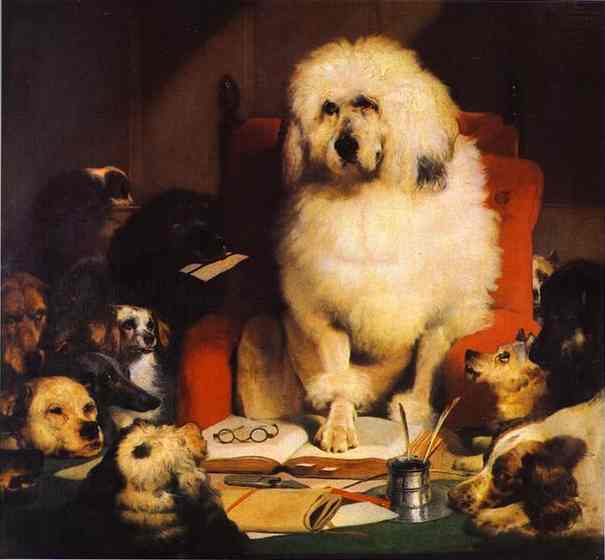
In the nineteenth century the British painter Edwin Landseer found still better subjects for satire — dogs. In his famous courtroom scene, a poodle occupies the Lord Chancellor's seat, surrounded by four-legged lawyers. The idea came from a judge's joking remark that the poodle belonging to the society dandy Count d'Orsay would make an excellent Lord Chancellor. Landseer turned a dinner-table quip into a full-scale painting about the legal system. The joke worked precisely because the dogs did not look ridiculous: they assumed their roles with such gravity that one could not help thinking of real proceedings.
Sometimes, though, animals do not merely imitate people — they trade places with them. In the satirical drawings of the French caricaturist Grandville, officials, society ladies and other participants in public life were given animal heads. The clothing, the gestures and the settings, meanwhile, were rendered with almost scientific precision. The more convincing the scene, the more glaring the absurdity. His beasts were less a flight of fancy than a way of exposing human failings without naming names.
The Japanese ukiyo-e master Utagawa Kuniyoshi used the device with particular ingenuity. In 1842 the authorities banned depictions of kabuki actors along with certain other popular subjects. Kuniyoshi found a way around it: he began drawing cats in the distinctive poses and roles of theatrical characters. Audiences familiar with the plays could recognise a scene without a single human face. The result was an almost perfect message: to the censor, cats; to those in the know, beloved actors and the very theatre the ban sought to curb. A feline face proved handier than a human one — not only for a joke, but for talking about power.
The secret of the device is simple. The animal mask creates a safe distance between the image and its real target. We laugh at the monkey in a wig, the dog on the judge's bench, the cat on stage — and then notice that we are laughing at our own habits, our vanity, the order of our society. Sometimes an animal says more about a person than the most faithful portrait.