When the daguerreotype was unveiled to the public in 1839, painters agreed almost unanimously that their profession was finished. It wasn't — but something far more interesting happened instead: painters started borrowing from photography. Eugène Delacroix, for one, made no secret of it. He was among the founders of the French Photographic Society in 1854 and drew from photographs of nudes taken for him by Eugène Durieu. Unlike a model of flesh and blood, a photograph never got tired, never got cold and never asked for a break.
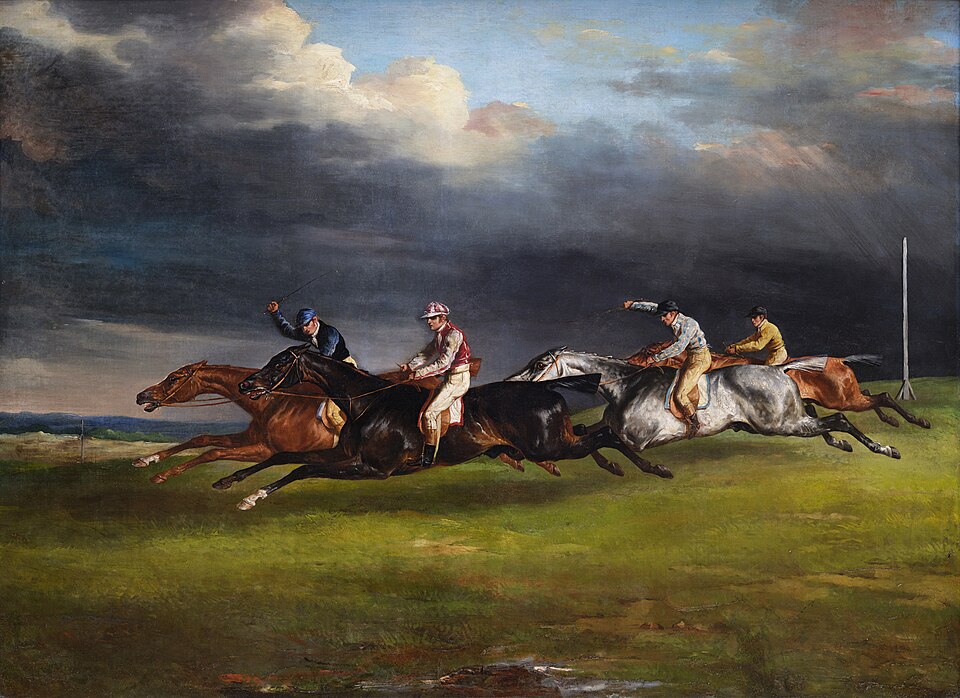
Then photography handed painting a far bigger gift. Before 1878, a galloping horse was always shown with its legs stretched out fore and aft — handsome, dynamic and completely untrue. Eadweard Muybridge lined a track with a battery of cameras and found that in mid-air a horse tucks its legs under its body. In 1881 he presented his sequences in Paris, including at the home of Ernest Meissonier, a great specialist in battle scenes with horses. Imagine how it feels to learn you have spent half your life painting horses wrong. Decades later, Francis Bacon worked from those same Muybridge albums — his contorted bodies grew partly out of them.
But the most important thing painting took from the camera was not anatomy; it was a way of looking. Edgar Degas composes his ballet classes as if the shot had been grabbed in a hurry: a figure is cut off by the edge of the canvas, the centre is empty floor, the viewer is perched somewhere above and off to one side. Once that would have counted as a botched composition; now it reads as life caught unawares. Degas took photographs himself, and in the 1890s Pierre Bonnard carried a compact Kodak around and shot his household — those same offhand poses resurface later in his paintings.
The funny part is that the traffic ran both ways: photographers of the period were doing their best to imitate painting, staging misty allegories, while painters were learning from them how to be accidental. The camera relieved painting of the duty to be accurate, and painting turned to what photography could not do: colour, texture, the trace of the brush.