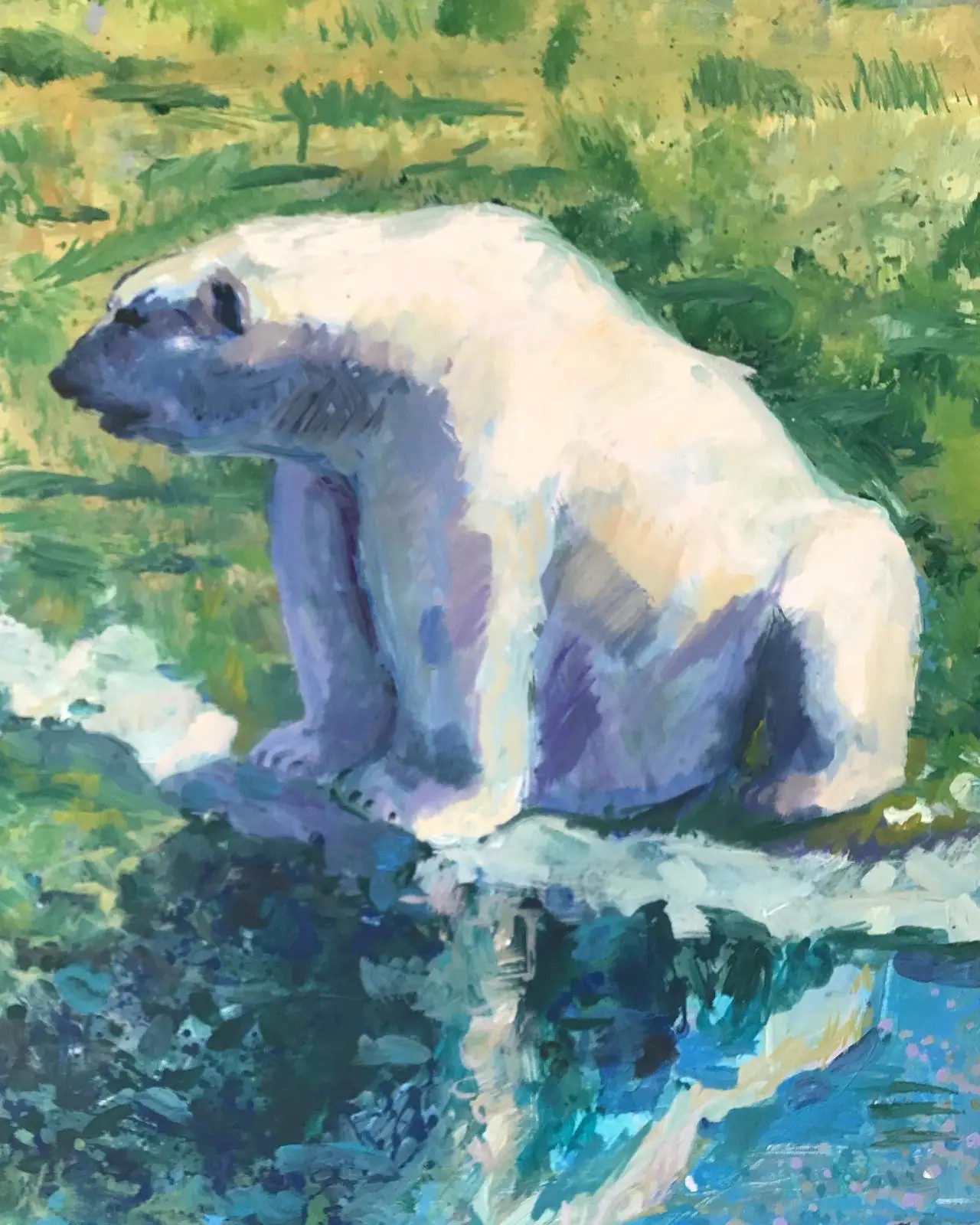
Animals appeared in art before we did. In the caves of Lascaux, wild bulls charged across the walls thousands of years before the first human face was painted. Yet for centuries, the academic hierarchy relegated animal art to a lower rung, somewhere between still life and landscape. In the Paris Salons of the 1830s, the term “animaliers” was even used mockingly in connection with the sculptor Antoine-Louis Barye and his bronze lions.
Today, this snobbery belongs to the past, giving way to an unexpected discovery: animals can be particularly comforting companions in the home. A portrait always looks back at you, as if expecting an emotional response. A landscape draws the eye into the distance. But Dürer’s famous “Young Hare” simply exists. It expects nothing from us. You can just look at it, discovering new details each time. Your gaze glides over the texture of the fur, lingers on the alert position of the ears, and takes in just how much attention the artist devoted to another living being. In that moment, the inner monologue finally falls silent.
The magic of good animal art lies in the precision of observation, not in an attempt to inspire affection. To paint the stallion Whistlejacket life-size, George Stubbs spent years studying equine anatomy. Rosa Bonheur obtained permission from the Paris police to wear trousers; otherwise, working in slaughterhouses and at livestock fairs would have been much more difficult for her. François Pompon, meanwhile, took a radically minimalist approach: he stripped his polar bear sculpture of everything superfluous, leaving only a smooth, flowing silhouette. This was the work that brought the sculptor international fame at the age of 67, in 1922.
Where should you begin when looking for a work for your collection? First, look for life, not mere decoration. The natural, convincing posture of an animal is always more compelling than an artificially created mood. Second, pay attention to paintings with expressive textures: an energetic brushstroke makes the animal almost tangible. And the most important rule: don’t bring an animal into your home unless you’d be happy to see it every morning. You’re the one who has to live with it, not the art critics.